How long do hospital beds typically last? In many hospitals, the practical answer is 10 to 15 years. That estimate is not a fixed expiration date. It is a working range shaped by design, workload, cleaning routines, repairs, and replacement planning.
William A. Hyman, a biomedical engineer and healthcare technology management expert, has stated, “Equipment life is determined by condition, performance, and risk—not age alone.” This principle fits hospital beds closely. A bed used constantly in an intensive care unit may experience thousands of adjustments each year. Its electric motors lift heavy patients. Its casters cross thresholds, lifts, and wet floors. Side rails open repeatedly. Small failures can become serious safety concerns.
Some beds last longer.
Others do not.
A well-maintained bed may remain reliable beyond 15 years, especially in a low-use department. However, older models can become difficult to support when replacement motors, control boards, or compatible mattresses disappear from the market. Cleaning chemicals may also weaken plastics, labels, and hand controls over time. That detail is easy to overlook.
This article examines why hospital beds typically last 10 to 15 years. It considers construction quality, preventive maintenance, patient weight, daily operating cycles, infection-control practices, and technology changes. It also questions whether “still working” truly means “still suitable.” A bed can move correctly yet lack modern alarms, pressure-relief features, or dependable emergency positioning. Age matters, but performance matters more.
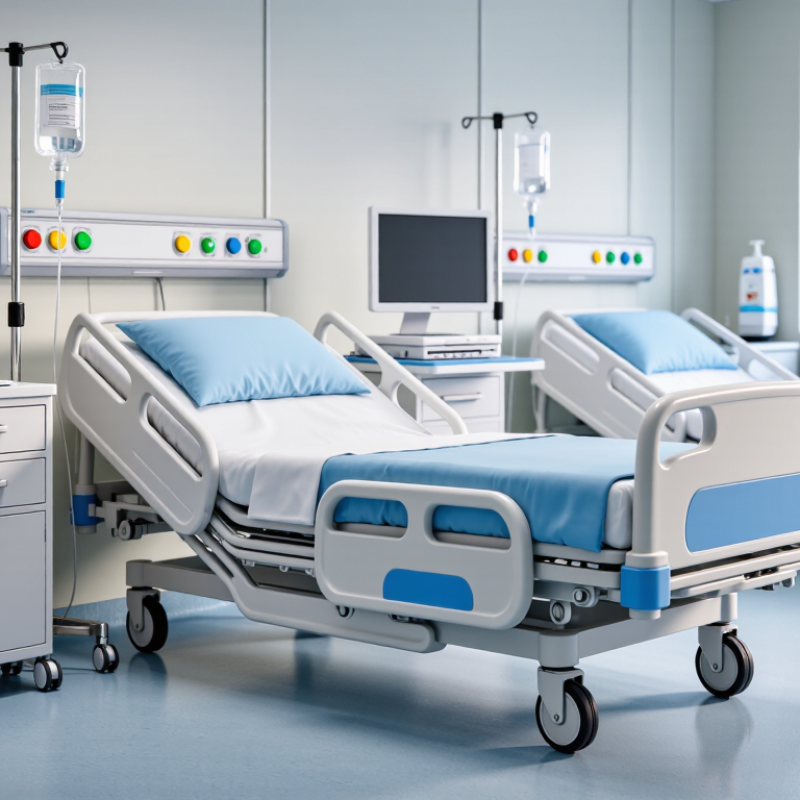
A hospital bed’s typical 10–15-year lifespan is determined by more than its frame. Daily use places repeated stress on motors, casters, side rails, joints, and lifting columns. A busy ward may adjust the same bed dozens of times each day. That wear is gradual, but measurable.
Clinical engineering teams usually inspect movement, braking, electrical safety, and emergency functions. They also review service records, fault reports, and replacement-part availability. Cleaning chemicals and moisture can damage controls, seals, and painted surfaces. Heavy patients and frequent transfers may increase mechanical strain. A bed used less often may remain reliable beyond fifteen years. An intensively used bed may become unsafe much earlier.
Maintenance quality strongly affects service life. Scheduled lubrication, battery testing, cable inspection, and prompt repairs can prevent small faults from becoming expensive failures. However, maintenance records are sometimes incomplete. That weakness can make a bed appear healthier than it is. New safety requirements and outdated control systems may also influence retirement decisions. A functioning motor does not guarantee dependable clinical performance. Hospitals should assess each bed’s actual condition, repair history, cleaning environment, and parts support before deciding whether to keep it. Age is only one factor.
| Lifecycle Dimension | Typical Data or Planning Range | How It Affects Service Life | Operational Consideration |
|---|---|---|---|
| Overall service-life expectation | Approximately 10–15 years | This is a common lifecycle-planning range for hospital beds, but it is not a universal legal limit or guaranteed lifespan. | Actual replacement timing should be based on safety, reliability, repair history, and compliance rather than age alone. |
| Intensity of use | 24-hour operation in many acute-care areas | Continuous use exposes frames, casters, brakes, motors, actuators, and control systems to repeated loading and adjustment cycles. | Emergency, intensive-care, and high-turnover units generally experience faster wear than lower-use areas. |
| Mechanical loading | Repeated patient, caregiver, and accessory loads | Frequent transfers, repositioning, bed-height changes, and side-rail operation can accelerate fatigue in joints, welds, lift mechanisms, and locking components. | Correct weight limits and proper transfer procedures help reduce structural and mechanical stress. |
| Electrical and powered components | Motors, actuators, control panels, batteries, and cables | Powered functions may become unreliable because of electrical wear, damaged cables, battery aging, moisture exposure, or obsolete control components. | Electrical safety testing and timely replacement of worn components are essential for continued use. |
| Caster and braking-system wear | High-frequency rolling and positioning | Casters, bearings, directional locks, and brakes are exposed to repeated movement, floor irregularities, impacts, and cleaning chemicals. | Loss of smooth movement or secure braking is a safety issue and may justify repair or replacement before the 10-year point. |
| Cleaning and disinfection exposure | Frequent cleaning throughout the bed’s operating life | Repeated exposure to disinfectants, moisture, and aggressive chemicals can degrade coatings, plastics, seals, upholstery, labels, and electrical connections. | Use only cleaning agents and procedures approved for the bed’s materials and electrical design. |
| Preventive maintenance | Scheduled inspections; many facilities use annual checks | Routine inspection can identify loose fasteners, damaged cables, hydraulic or actuator problems, worn brakes, and structural damage before they become critical. | Inspection frequency should follow the manufacturer’s instructions, facility policy, risk level, and applicable local requirements. |
| Replacement-parts availability | Declines as equipment becomes older | Older beds may become difficult or uneconomical to repair when motors, control boards, batteries, casters, or proprietary mechanical parts are no longer supported. | Parts availability and repair cost should be reviewed during capital-planning decisions. |
| Safety and regulatory requirements | Requirements may change during the bed’s life | Updated electrical-safety, medical-device, infection-control, and patient-safety expectations can make older equipment unsuitable even when it still operates. | Facilities should periodically verify continued compliance with current standards and local regulations. |
| Technological obsolescence | Often becomes more relevant after 8–12 years | Older beds may lack modern weighing, integrated alarm, networking, fall-prevention, or electronic positioning features required by newer workflows. | Replacement may be driven by clinical functionality and interoperability rather than mechanical failure. |
| Refurbishment potential | Can extend useful life when economically justified | Replacement of mattresses, casters, batteries, actuators, upholstery, cables, and worn hardware can restore performance and appearance. | Refurbishment should include documented testing and confirmation that safety-critical components remain reliable. |
| Common replacement triggers | Repeated failures, unsafe movement, corrosion, or excessive repair cost | A bed may reach the end of its practical life before 10–15 years if it presents safety risks, downtime, contamination concerns, or poor reliability. | Retirement decisions should consider total cost of ownership, not only the original purchase price. |
Note: The 10–15-year figure is a general healthcare equipment lifecycle-planning range. Actual service life varies by bed design, workload, maintenance quality, environmental conditions, parts support, and applicable safety requirements.
Many hospital beds remain usable for about 10 to 15 years. This is only a planning range. Heavy use may shorten it, while light use may extend it.
Motors, lifting columns, casters, side rails, cables, and batteries often wear before the frame. Casters may become noisy after repeated impacts. Batteries gradually lose capacity.
A busy ward may adjust one bed dozens of times daily. Repeated movement stresses joints, actuators, brakes, and control panels. Frequent patient transfers add mechanical strain.
Yes, strong or unsuitable disinfectants may weaken plastics, coatings, labels, and electrical seals. Residue can collect around seams and hinges. Moisture wins.
Surface appearance does not reveal weakened wiring, tired motors, or damaged lifting components. A bed may look polished but move unevenly. Appearance can mislead.
Regular inspections can identify loose fasteners, weak brakes, damaged cables, and uneven movement. Technicians should test batteries, lubricate suitable joints, and replace worn casters promptly. Records matter.
Retirement may be appropriate after repeated faults, unreliable emergency functions, or unavailable replacement parts. New safety requirements can also influence the decision. Age alone is insufficient.
They should review actual condition, repair history, cleaning damage, usage intensity, and parts support. Testing should include movement, braking, electrical safety, and emergency functions. The judgment remains imperfect.
Hospital beds typically last 10 to 15 years because their lifespan depends on construction quality, daily use, operating conditions, and care practices. Strong frames may remain functional for many years, but motors, control systems, casters, side rails, mattresses, and lifting mechanisms can gradually wear down through repeated movement, heavy loads, and constant cleaning. This explains why the question “how long do hospital beds typically last” has no single answer for every facility.
Regular inspections, preventive maintenance, proper disinfection, and timely replacement of worn components can extend a bed’s useful service life while supporting infection control. However, safety standards and changing clinical requirements may eventually make an older bed unsuitable, even if it still operates. When repairs become frequent, replacement parts are difficult to obtain, or a bed can no longer provide reliable positioning, stability, and patient protection, replacing it is often more practical and safer than continuing to maintain it.

 Dgem Medical